I can make a copy of a digital photograph almost without thinking about it. One can live on my computer, another on a backup drive, perhaps another online, and I can send the same image to several people without giving up anything myself.
That has become so normal that I rarely think about how remarkable it is.
But what if there were only one?
One photograph. One physical object. No RAW file, no backup, no second copy waiting somewhere. If I lost it, damaged it, or gave it away, it would be gone.
I have a feeling I would treat that photograph differently.
Photography Clips Newsletter
Get my latest articles, thoughts on photography and creativity, and Photography Clips episodes in your inbox.
I would know where I put it. I would probably be more careful when I handled it. If someone wanted to borrow it, I might think twice before letting it leave my hands. None of that would make the photograph better, but knowing it couldn’t be replaced would change my relationship with it.
Digital photography has given us a kind of security that earlier generations didn’t always have, and I’m grateful for it. I don’t want to return to a time when losing one negative or one print could mean losing an image forever. Still, I wonder whether the ease of duplication has quietly changed the way I respond to individual photographs.
When a Photograph Is a Physical Object
Years ago, family photographs often existed as physical things. They went into albums, wallets, frames, envelopes, and boxes. You picked them up. You handed them to someone. You found them years later tucked somewhere you had forgotten about.
Today, thousands of photographs can sit on a drive without taking up any visible space at all.
That convenience is wonderful, but I’m not sure the experience is the same.
What If There Were No Next Image?
I notice it most when I’m looking through photographs on a screen. It’s very easy to move quickly. One image appears, then another, then another. There is always something waiting after the photograph in front of me.
I started wondering whether I would look differently if there were no next image.
Suppose one photograph was sitting on the table and that was all I had. Would I spend more time with it? Would I notice something I missed the first time? Would the simple knowledge that this was the only one make me less eager to move on?
Scarcity doesn’t make a photograph good. A weak photograph is still a weak photograph even if it’s the only copy in existence. But knowing something cannot easily be replaced has a way of slowing us down.
Maybe that’s part of what still draws me to prints.
A printed photograph occupies space. I can leave it on a desk, put it on a wall, or pick it up later. It doesn’t disappear when I close a window or turn off the computer. I may walk past it for days and then suddenly notice something I hadn’t paid attention to before.
The image hasn’t changed.
My attention has.
That’s different from the way I often experience photographs buried among thousands of files. I know they’re there, and I know I can retrieve them whenever I want. Somehow that makes it easier to believe there will always be another time to look.
Sometimes there isn’t.
Not because the file disappears, but because I simply never go back.
Giving One Photograph Our Attention
I don’t want to give up the advantages of digital photography. I want backups. I want multiple copies of photographs I care about. I like knowing I can give someone an image without losing my own.
What I don’t want is for unlimited copies to make an individual photograph seem disposable.
Maybe the interesting part isn’t whether there really is only one.
Maybe it’s whether I ever stop long enough to treat one as though there were.
Learn More
Physical Versus Ephemeral: Photography as a Hybrid Medium
About the Photograph
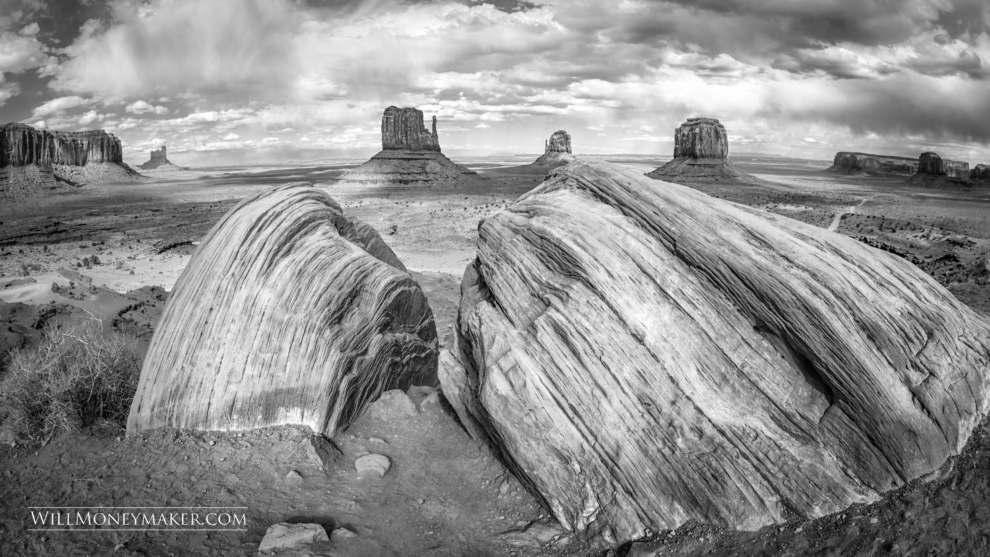
Photograph taken at Monument Valley Navajo Tribal Park, Arizona. Photograph by Will Moneymaker.
Photography Clips Newsletter
Keep looking. Keep creating.
Follow along with my photographs, journal entries, Photography Clips, and occasional life updates.
Free to join. Unsubscribe anytime.