There are photographs I can see without opening the file.
I couldn’t describe every tiny detail, and I’m sure my memory has changed a few things over the years. But I know where the light falls. I know what caught my attention. I know how the photograph is arranged inside the frame. If you asked me about one of those images right now, I could probably sit here and see most of it in my mind.
What’s strange is how many of my other photographs have almost completely disappeared from memory.
I’ve spent countless hours making photographs, bringing them home, processing them, organizing them, and deciding which ones I liked. Some of those images received quite a bit of my attention at the time. Put one in front of me today, and I might immediately say, “Oh yes, I remember that.”
But until I see it, nothing.
Photography Clips Newsletter
Get my latest articles, thoughts on photography and creativity, and Photography Clips episodes in your inbox.
Then there are those few photographs I don’t need a computer to remember.
I started wondering why.
The Photographs That Stay With Me
The obvious answer would be that they’re my best photographs. Maybe the strongest images earn a permanent place in memory while the others slowly fade away.
Except that doesn’t seem to be how it works.
I can remember photographs that I know aren’t among my strongest. Some have technical problems. There are compositions I would probably change if I could make them again today. A few might never be photographs I would put in a portfolio or hang on a wall.
Yet I know them.
Sometimes I remember exactly where I was standing. I remember something about the weather or the light. I remember what made me stop. Occasionally, I can remember what was happening in my life around the time I made the photograph.
The image and the experience became linked.
Other times, I’ve made what I would consider a better photograph, but the experience surrounding it apparently didn’t leave much behind. The photograph exists. I may even like it. I just don’t carry it around with me.
That has made me think there may be two very different ways one of our photographs can become important.
There is a photograph. We can judge the composition, lighting, timing, color, subject, technique, and all the other things photographers consider.
Then there is the photograph as part of an experience.
Those two things don’t always agree.
Memory Has Its Own Filing System
Try it sometime without looking at your files. Think about photographs you’ve made over the years and see which ones appear first.
I doubt your mind will carefully sort through everything you’ve ever photographed and hand you a ranked list of your technically best work. A few pictures will probably just show up.
Why those?
Maybe one came from an important time in your life. Another may have required a ridiculous amount of effort for a photograph that looks fairly simple. Perhaps one reminds you of somebody who was there. Another might have been the first time you finally understood something you had been struggling to do with a camera.
There may also be photographs you remember for no reason you can easily explain.
I think those may be the most interesting ones.
I’ve spent years trying to keep photography organized. Files have names. Images have folders. There are drives, backups, archives, dates, and systems designed to help me find things again.
My memory apparently has its own filing system, and it doesn’t seem interested in mine.
It keeps what it wants.
Going through older photographs makes that especially obvious. Sometimes I find something I had completely forgotten. Other times, I come across an image I thought I remembered perfectly and discover that the photograph on the screen isn’t quite the one I’ve been carrying around in my head.
The light may not have been as dramatic as I remembered. The subject might be smaller in the frame. There may be something sitting along an edge that I somehow removed from my mental version years ago.
Apparently, my memory has been doing a little post-processing of its own.
When a Photograph Changes With Us
I like that idea because it means my relationship with a photograph doesn’t stop when I finish editing it. The file may remain exactly the same for twenty years, but I won’t.
A photograph that seemed extremely important when I made it might eventually lose some of its hold on me. Another that I barely noticed at first may become more meaningful with time. Experience changes. People change. Places change. We change.
The photograph sits there quietly while all of that happens around it.
Maybe that’s why I don’t think we can always identify the photographs that will become important to us while we’re making them.
And I’m glad we can’t.
I already have enough to think about when I’m behind the camera. I don’t need to stand there wondering whether a particular frame will still be living somewhere in my head ten or twenty years from now.
That decision seems to happen later.
Of all the photographs I’ve taken, most need a hard drive, a folder, or a screen before I can see them again.
A few don’t.
Somehow, they made it out of the archive.
I already know where they are.
Learn More
About the Photograph
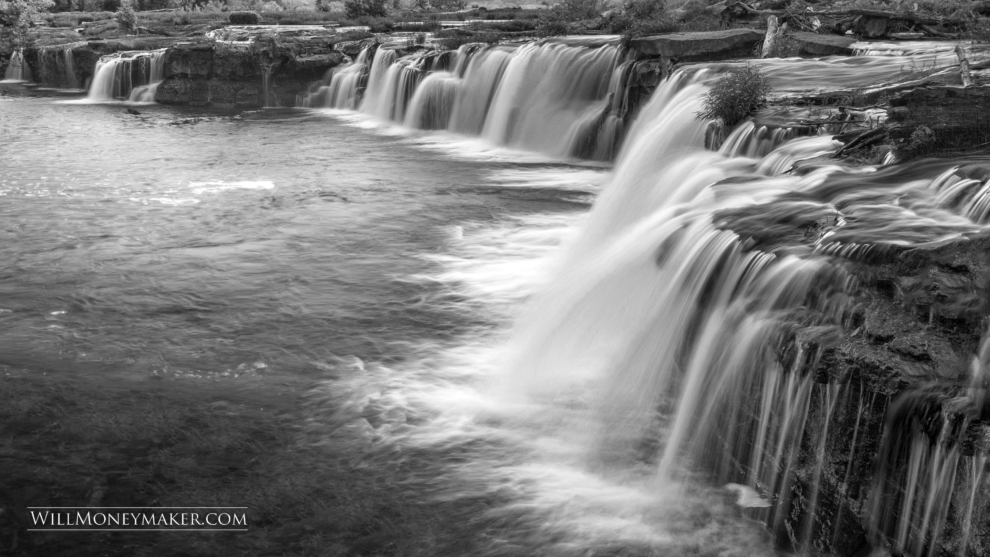
Photograph taken at Sandstone Falls near Hinton, West Virginia. Photograph by Will Moneymaker.
Photography Clips Newsletter
Keep looking. Keep creating.
Follow along with my photographs, journal entries, Photography Clips, and occasional life updates.
Free to join. Unsubscribe anytime.