The camera only records what is in front of it, but the photograph begins before that. It begins when something makes me stop.
Sometimes it is a certain kind of light. Sometimes it is a face in a crowd. Sometimes it is a shadow falling across a wall, making an ordinary place look different for a moment. Other times, it is something quiet that most people would walk past without giving it much thought.
That is usually where photography starts for me. Not with the camera. Not with the settings. Not with trying to make something impressive. It starts with noticing.
I have taken enough photographs to know that the first thing I see is not always the best photograph. Sometimes it is only the thing that gets my attention. The real photograph may be off to the side. It may be in the background. It may be in the light, the shape, the shadow, or the space around the subject rather than the subject itself. That is why I try not to rush. When something makes me stop, I want to give myself enough time to understand why.
A strong photograph does not usually come from simply pointing the camera at something interesting. There needs to be a reason behind it. Sometimes that reason is clear right away. The sky looks heavy before a storm. A street has a lonely feeling. A person’s expression says more than words could. A small object catches the light in a way that makes it seem more important than it did a minute earlier.
Other times, I may not fully understand why something has my attention. I know there is something there. That is when I slow down and start working the scene. I look at it from one angle, then another. I ask myself what is really pulling me in. Is it the light? Is it the shape? Is it the mood? Is it the way everything seems ordinary, but still worth remembering?
That is the thought process behind a photograph.
Before I take the picture, I usually ask myself what I am really seeing. Not just what is physically there, but what matters. A photograph does not have to explain everything, but it should give the viewer a reason to stay with it for more than a second. It should make them sense that there is something worth looking at, even if the subject itself is simple.
That may sound easy, but it is not always easy when you are standing there with the camera in your hand. The world is messy. There are signs, wires, cars, trash cans, bright spots, dull backgrounds, and all kinds of things that seem to sneak into a frame just when you think you have something. Photography often begins with excitement, but then it quickly becomes a series of small decisions.
When I photographed baseball, I was not just thinking about the players. The game mattered, of course, but the photograph was not always in the swing of the bat or the throw to first base. Sometimes it was in the tension before the pitch. Sometimes it was in the way a player stood ready. Sometimes it was in the fans leaning forward, waiting for something to happen.
The game had a pulse, and I wanted the photograph to show that.
That is one of the things I enjoy about photography. The obvious subject is not always the whole story. Sometimes the real photograph is happening around the subject. It might be in the person watching. It might be in the quiet moment after the action. It might be in the expression that lasts only a second before it disappears.
That is also what makes photography unpredictable. You can walk into a scene thinking you know what you are going to photograph, and then the better image shows up somewhere else. You may go after the big moment and end up finding the better picture in the small one. That happens more often than people think.
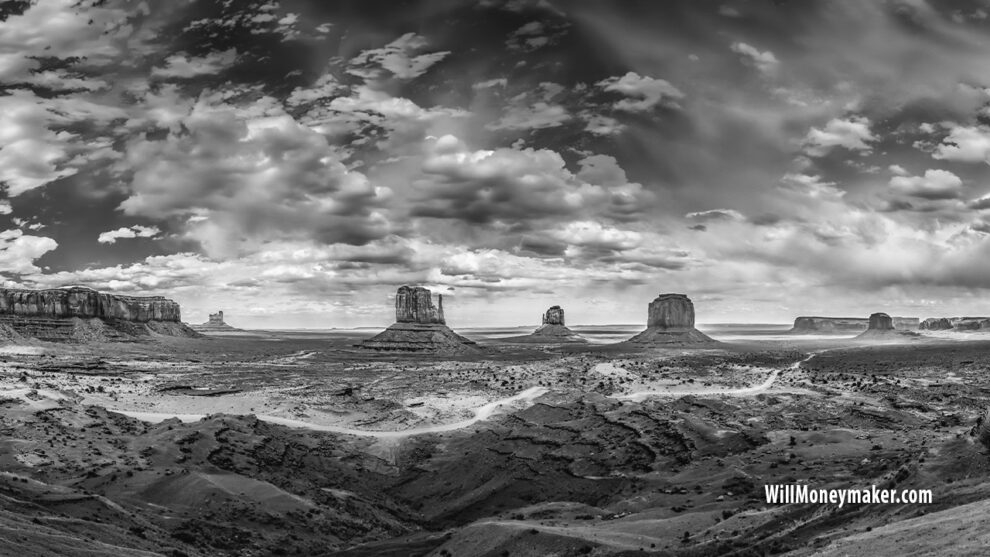
The thought process also changes depending on what I am photographing. At a baseball game, I am thinking ahead. I am watching movement, tension, body language, and timing. The photograph may come and go in a fraction of a second, so I have to anticipate what is about to happen. With a landscape, the pace is different. The subject may be still, but the decisions are just as important. I am studying light, shape, distance, clouds, shadows, and the way the eye moves through the frame. One kind of photography asks me to react quickly. The other asks me to slow down and study carefully. Both require attention, but they require a different kind of attention.
After I know what has my attention, I start thinking about the frame. What belongs in the photograph? What needs to be left out? That second question matters more than people think. A camera sees everything we allow into the frame. It does not know what is distracting. It does not know what weakens the image. It does not know that a bright spot in the corner is pulling the eye away from the subject. That is the photographer’s job.
I may move a little to the left or right. I may lower the camera. I may get closer. I may wait for something to move out of the background. A small change can make a photograph stronger or weaker. Sometimes the difference is only a few inches. That is one reason photography can be so frustrating and so satisfying at the same time. You can be standing in the right place and still need to move just a little to make the image work.
There have been plenty of times when I thought I had the photograph, only to realize later that I was close, but not close enough. Maybe the background was too busy. Maybe I left too much space, which did not help. Maybe I cut off something I should have kept. Maybe I included something that should have been left out. Those little things matter, and the more you photograph, the more you start seeing them before you press the shutter.
Composition is not just about rules. The rule of thirds can be useful. Leading lines can be useful. Balance can be useful. But rules are not the photograph. They are tools. If they help the image, use them. If they get in the way, leave them alone.
Some scenes look empty until one small thing gives them life. Maybe it is a person walking through the frame. Maybe it is a cat resting near a doorway. Maybe it is a shadow crossing the pavement. Maybe it is a hand on a railing, a curtain in a window, or a chair left slightly out of place. Those small details can change everything. They can turn a plain scene into something that has a sense of life and presence.
Photography teaches you to pay attention to those things.
Light is another part of the decision, and it may be the part that changes everything the fastest. Light can make an ordinary subject worth photographing, and poor light can make a strong subject fall flat. I pay attention to where the light is coming from, how hard or soft it is, and what the shadows are doing. Shadows are not dead space. They can create shape, depth, mood, and structure.
I like natural light, but natural light does not wait around. Morning light is different from afternoon light. A cloudy day gives a different kind of photograph than direct sunlight. The hour after sunrise or the hour before sunset can be beautiful, but even then, it is not just about warm color. It is about direction, contrast, and the way the light touches the subject. Sometimes the shadow is what makes the photograph. Sometimes the light is interesting because of what it does not show.
That is one of the reasons I enjoy black-and-white photography. It makes me think harder about light, form, and tone. Without color doing some of the work, the photograph has to stand on structure. The light has to carry more weight. The composition has to hold together. There is nowhere for a weak image to hide.
Black and white can strip a photograph down to what matters. Shape. Contrast. Texture. Expression. Direction. It can make a simple image stronger by reducing distractions. I do not think every photograph should be black and white, but when it works, it can give the image a clarity that color sometimes takes away.
Camera settings matter, but I do not like making them the center of the photograph. They are there to serve the image. They are not the image.
Aperture controls how much light enters the camera and also affects the depth of field. If I want the background soft, I may use a wider aperture. If I want more of the scene to be sharp, I may stop down. Shutter speed controls motion. A fast shutter speed can freeze action. A slow shutter speed can let movement show. If I photograph water, I may want it sharp and textured, or smooth. That choice changes the mood of the photograph.
ISO helps when the light is low, but it can add noise. Sometimes that matters. Sometimes it does not. I have learned that a photograph can fail even when everything is technically correct. The question is not always whether the file is perfect. The question is whether the photograph works.
That is where photography gets interesting to me. You can have the settings right and still end up with a flat photograph. You can have a technically imperfect image that still says something. Of course, I want the photograph to be sharp when it needs to be sharp. I want the exposure to work. I want the file to hold up. But technical quality alone does not make a photograph worth looking at.
The more you photograph, the faster these choices happen. At first, you may have to think through every setting. After a while, much of it becomes instinct. You see the light, you see the motion, and you know what you need to change. But instinct does not mean careless. It means you have made the same kinds of decisions enough times that your mind starts working ahead of your hands.
Patience is one of the hardest parts of photography. Sometimes the scene is almost there, but not quite. The light is close. The background is close. The person is almost in the right place. The expression is almost right. So you wait.
That waiting matters. A photograph taken too soon can feel unfinished. A photograph taken one second later may have everything it needs. That is frustrating, but it is also part of the work. Photography often rewards the person who stays alert just a little longer.
I have had moments where the photograph did not come from chasing something dramatic. It came from standing still and paying attention. A quiet bench. A person sitting in soft light. A hand resting on another hand. A small human moment that would have been easy to miss. Those are the photographs that remind me why observation matters.
I also think about the mood I want the photograph to carry, not in a forced way, but in an honest way. Some photographs are peaceful. Some are lonely. Some are tense. Some are joyful. Some carry the weight of memory. That mood affects every choice. It affects where I stand. It affects how much space I leave around the subject. It affects whether I want contrast or softness. It affects whether I want color or black-and-white.
That is why two people can stand in the same place with the same camera and come away with completely different images. One person may notice the architecture. Another may notice the light. Another may notice the person sitting alone in the corner. Another may notice the pattern on the floor. None of them is wrong. They are simply responding to different things.
Photography is personal because every photograph shows a decision. It shows what the photographer noticed and what the photographer left alone. It shows what mattered in that moment.
The camera records the scene, but the photographer chooses the meaning.
Every photograph I make carries some part of how I saw that moment. It may be a simple image. It may be quiet. It may not explain itself right away. But if it caused me to stop, then there was something there. My job is to figure out how to show it clearly enough that someone else might stop too.
That is the real thought process behind a photograph. It is not just settings. It is not just rules. It is not just waiting for something beautiful to appear. It is noticing, choosing, removing, arranging, waiting, and responding to what is in front of you.
The shutter may only take a fraction of a second, but the photograph begins long before that. It begins with the decision to pay attention.