I do not think a photograph has to be famous to change you.
It does not even have to be understood by anyone else.
Sometimes an image works on you privately. You see it once, and for some reason, it stays around in your mind. You may not know why at first. You may not be able to explain what it did. But later, when you are holding a camera and standing in front of something ordinary, you realize that the image has taught you how to look.
That is the part of photography I keep coming back to.
A photograph can change your eye before it changes your work.
It can make you notice light differently. It can make you pay attention to the edge of the frame. It can make you see how much a face can say without expression, or how a quiet room can carry more weight than a busy scene. It can make you realize that the photograph is not always hiding in the obvious place.
Some images made by other photographers have done that for me. I may not remember every detail of where I first saw them, but I remember the shift they caused. They widened the field a little. They showed me that photography was not only about recording what was in front of me. It was about learning how to recognize something before it disappeared.
That changed the way I worked.
Not all at once. Photography rarely works that way. It was more like a slow correction. I would see a photograph, think about it, forget about it, then find myself carrying some part of it into my own seeing and not copying it, not trying to recreate it, just letting it sharpen my attention.
That is different from imitation.
Imitation tries to produce the same result.
Influence changes the way you notice.
There is a big difference.
The photographs that have affected me most are not always the ones filled with drama. Some are quiet. Some are simple. Some are built around a person, a wall, a shadow, a shape, or a small amount of light in the right place. They do not shout for attention. They sit there and wait for you to slow down.
I have grown to respect that kind of photograph.
When I was younger, I think I wanted images to announce themselves quickly. I wanted strength, contrast, reaction, and impact. I wanted the kind of photograph people would stop for right away. There is nothing wrong with that. Some photographs should hit hard. Some scenes ask for that kind of treatment.
But over time, I have become more interested in photographs that stay quiet at first.
They do not explain everything.
They do not try to impress you.
They ask you to look longer.
That kind of image has changed my relationship with the camera. It has made me less interested in chasing the most dramatic subject and more interested in recognizing what is already there. The older I get, the more I trust the photograph that appears slowly.
A tree in uneven light.
A person standing alone.
A building with one small bright window.
A shadow cutting across a sidewalk.
A familiar place seen from a slightly different angle.
These are not rare subjects. That is the point. Photography has a way of taking the common things around us and making us responsible for whether we see them or miss them.
That responsibility has shaped me.
The images I have made myself have changed me in another way. They are tied to experience. I know what was happening outside the frame. I know what I was trying to do. I know when I failed, when I got close, and when the photograph surprised me.
Some of my own photographs have become markers in my growth.
Not because they are perfect.
Not because other people would choose them.
But because they caught me at a turning point.
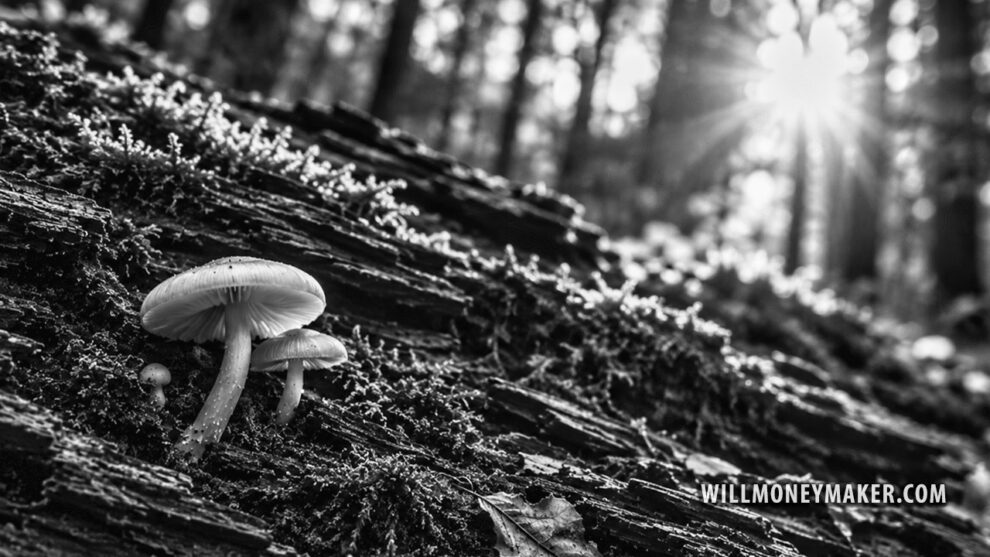
There are pictures I can look back on and see that I was beginning to understand something. Maybe I was learning how to simplify. Maybe I was learning to wait. Maybe I was learning that the subject alone was not enough. Maybe I was learning that black and white could remove distractions and leave the image's structure standing on its own.
Those realizations did not arrive as instructions.
They came through pictures.
That is one of the strange things about photography. You can study it, read about it, listen to others talk about it, and still not fully understand something until an image shows it to you. Then it becomes real. You see the lesson in a frame instead of hearing it as advice.
A photograph can do that.
It can make an idea visible.
I have also learned that the images that change you are not always the images you expected to make. Many times, I have gone out looking for one photograph and come home with another. The better image was off to the side. It was behind me. It was in the background. It was in the part of the scene I almost dismissed.
That has happened often enough that I try to stay less certain when I begin.
Certainty can get in the way.
When I decide too quickly what the photograph is supposed to be, I may stop seeing what is actually there. I may force the scene into the image I imagined instead of letting the better photograph reveal itself. Some of my strongest lessons have come from realizing that I was looking in the wrong direction.
That kind of correction is humbling.
It is also useful.
Photography keeps teaching me that seeing is active. It is not just about having eyes open. It is choosing where to place attention. It is learning how to separate the surface from the substance. It is recognizing when a small thing has more force than the large thing beside it.
Images created by others have helped me with that.
The images I have made have tested it.
Together, they have shaped my eye.
I do not think of this as a list of favorite photographs. Favorite photographs can change from year to year. What I am thinking about here is different. These are the images that altered my direction, even slightly. They are the photographs that made me pause before making my own. They changed the questions I ask when I am working.
What is really holding this scene together?
What can be left out?
Where is the light doing the work?
Is the obvious subject actually the photograph?
Would this image be stronger if it said less?
Those questions did not come from nowhere. They came from looking. They came from standing before my own failures. They came from studying photographs that did not let me move past them too quickly.
That is why I think every photographer carries a private collection inside them.
Not a folder on a computer.
Not a gallery.
A mental collection.
Images seen over the years. Images made during different seasons of life. Images that taught patience. Images that corrected bad habits. Images that made certain choices feel possible. Images that permitted working more quietly.
That private collection becomes part of how we see.
We may not always be aware of it, but it is there. Every time we lift the camera, we bring those images with us. They influence what we notice, what we ignore, what we wait for, and what we leave out.
The photographs that changed me did not hand me a formula.
They gave me better attention.
That is more useful.
A formula can make work predictable. Attention keeps the work alive. It allows each photograph to be approached honestly rather than forced into a style or habit. It keeps the photographer attuned to the scene rather than relying on old tricks.
I need that reminder often.
There is always the temptation to repeat what has worked before. Same kind of light. Same kind of framing. Same kind of subject. Same kind of mood. Repetition can look like consistency for a while, but it can also become a rut if I am not careful.
The images that have changed me help pull me out of that.
They remind me that photography is not just about producing more pictures. It is about being trained by the act of seeing. The more carefully I look, the more I realize that the world has not become less interesting. I have become too quick at times.
Too quick to decide.
Too quick to move on.
Too quick to think, I already know what is in front of me.
A strong photograph slows that down.
It asks for a second look.
Sometimes it changes the way the next photograph is made.
That is enough.
When I think about images that changed my life, I do not think only of grand moments or famous photographs. I think of the pictures that caught my attention. The ones that made me see light differently. The ones that taught me restraint. The ones that showed me how much could be carried by a simple frame.
I think of my own photographs, too, especially the ones that mark a change in how I saw. Some were successful. Some were not. But they all belong to the process. They remind me that photography is not only about the finished image. It is about the person being shaped behind the camera.
That may be the deepest change photography has made in me.
It has taught me to look again.
And again.
And again.
Because the image that changes how you see may not be somewhere far away.
It may be right in front of you, waiting for you to notice it finally.