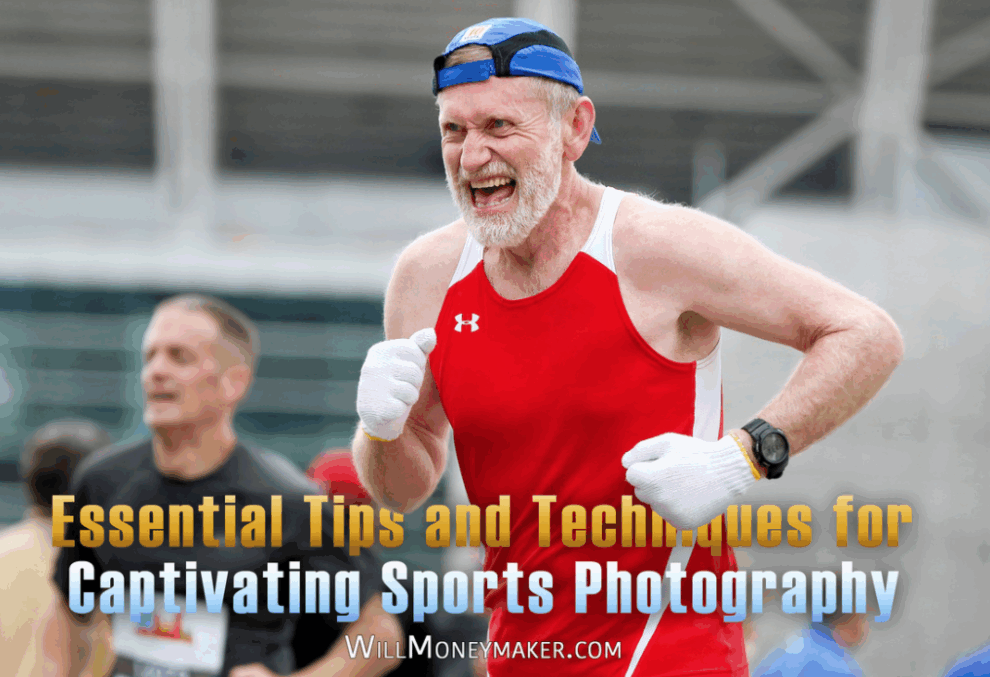
I was given an assignment to photograph a race with more than 16,000 runners and that led me to think about what a delightful challenge sports photography really is. Whether you’re a professional looking to hone your skills or you’d simply like a great collection of images from your children’s sporting events, here are a few of my favorite tips and tricks for sports photography. Put these tips to work for you, and you’ll certainly make the most of any sporting event!
Before You Leave
As you’re packing gear for your sporting event, there are several things to consider. First, check your batteries and memory cards. Back up any photographs you need to keep before formatting a card in the camera. Bring enough empty cards for the event and keep used cards separate so you don’t overwrite or mix them up.
The next consideration is the lenses. Some photographers prefer to take two cameras along — one with a wide lens and another with a long lens. This is because sporting events don’t leave you much if any, time for lens changes. My thought is that if a sporting event doesn’t leave you time for lens changes, then it also doesn’t leave you time to switch back and forth between cameras. For that reason, I stick with a 70-200mm lens because it gives me all of the view angles I use most.
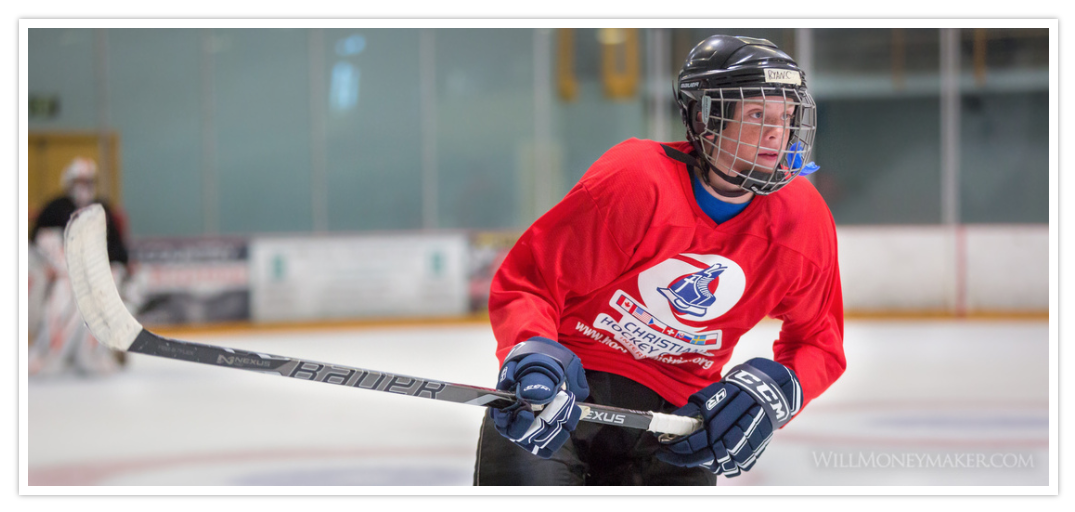
There are a few other pieces of gear that come in handy. Monopods can save your arms, although they make it harder for you to get shots at low angles. Weather-appropriate gear is nice to have too, even when the forecast looks promising. You could face rain or snow, so make sure you’re prepared!
Check the event’s rules about flash and photographer access. Flash can distract participants, so available light is often the better choice during play. Plan your exposure around the light you actually have.
Photography Clips Newsletter
Get my latest articles, thoughts on photography and creativity, and Photography Clips episodes in your inbox.
Sports Photography and Your Camera
There are lots of different camera settings and features that can help you out. Here are a few things to remember:
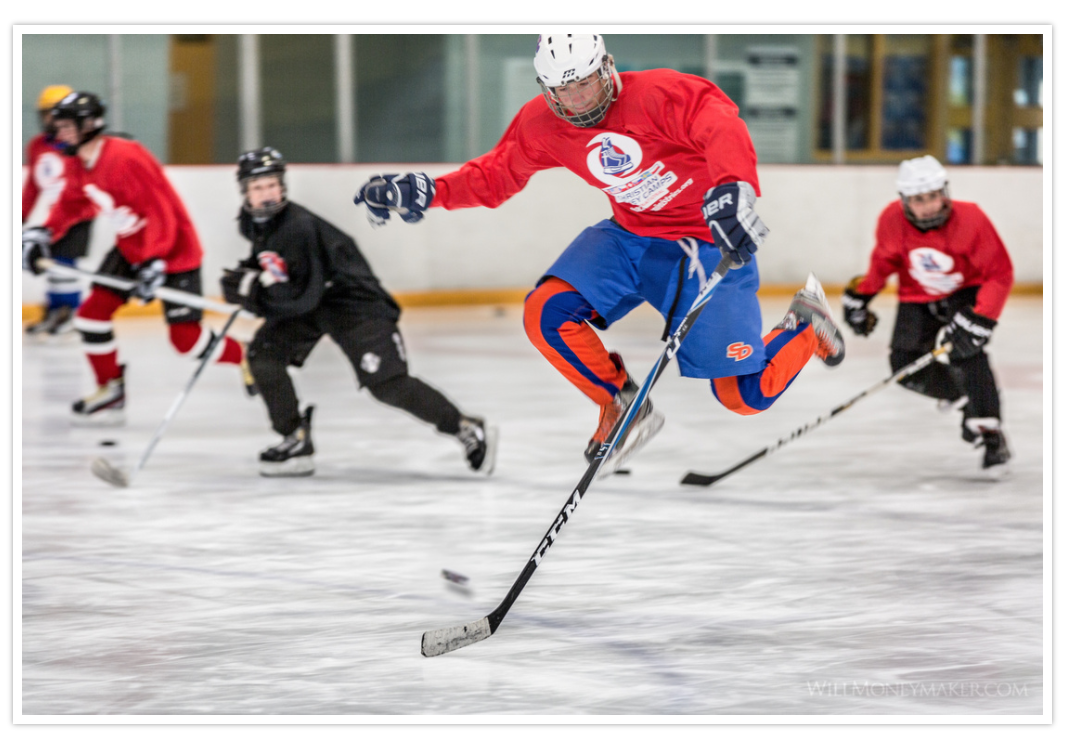
- Using long focal lengths will help you create images with more background blur, which is especially nice to show motion and to isolate your subject.
- Review exposure and sharpness during safe breaks in the action. The histogram and highlight warnings can help, but there is no single ideal histogram shape for every sports scene.
- Choose aperture for the depth of field you need. A wide aperture can help isolate an athlete, while a smaller aperture may be useful for a group or a scene with several important subjects.
- Choose shutter speed for the action. Around 1/1000 second can be a useful starting point for fast movement, but test and adjust for the sport. Raise ISO as needed to maintain that speed. Auto ISO can help when the light changes.
- Continuous autofocus is often useful so that you can keep the focus on moving subjects.
- Choose an autofocus area mode suited to the sport and your camera. Single-point, zone, and subject-tracking modes can all be useful. Try continuous autofocus and test whether face or eye detection holds the athlete reliably. Focus on the part of the subject you want sharp.
- Use your camera’s high-speed drive so that you’re taking photos in quick bursts of two to four. Time your bursts around the action, and avoid assuming that a long burst guarantees the strongest moment.
- Evaluative or matrix metering is a useful starting point. Watch for changing backgrounds or bright uniforms that affect the meter. Use exposure compensation or manual exposure when appropriate.
Tips and Tricks for the Big Event
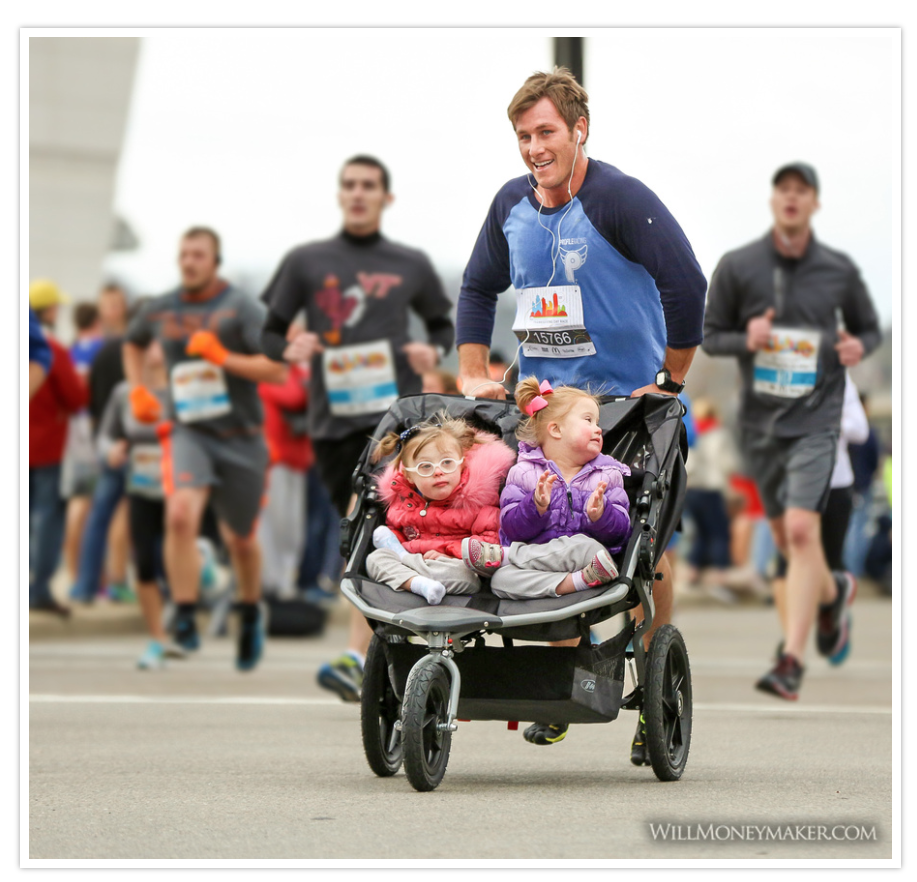
At sporting events, particularly races, the participants are often packed together very closely — especially at the beginning of the event. The key to getting as many unique images of the participants as possible is to stay calm and realize that you’re likely to miss a few, despite your best efforts. Some photographers, because they’re panicking, default to wide-angle lenses so that they can zoom out and capture entire groups. However, zooming in to photograph individuals is the preferable option, even if it means you capture a third or less of the athletes. If you want, take a few zoomed out shots of groups of athletes to establish the story you’re trying to tell, then zoom back in to focus on individuals.
It’s also important to get the composition and exposure right directly out of the camera. Post-processing tools can fix many flaws, but even if you batch process images, you’re looking at doing so for hundreds or thousands of images once the event is over. Getting it right the first time means less work for you later on and an overall better-finished product.
Speaking of composition, there are a few rules that you should try to follow wherever possible:
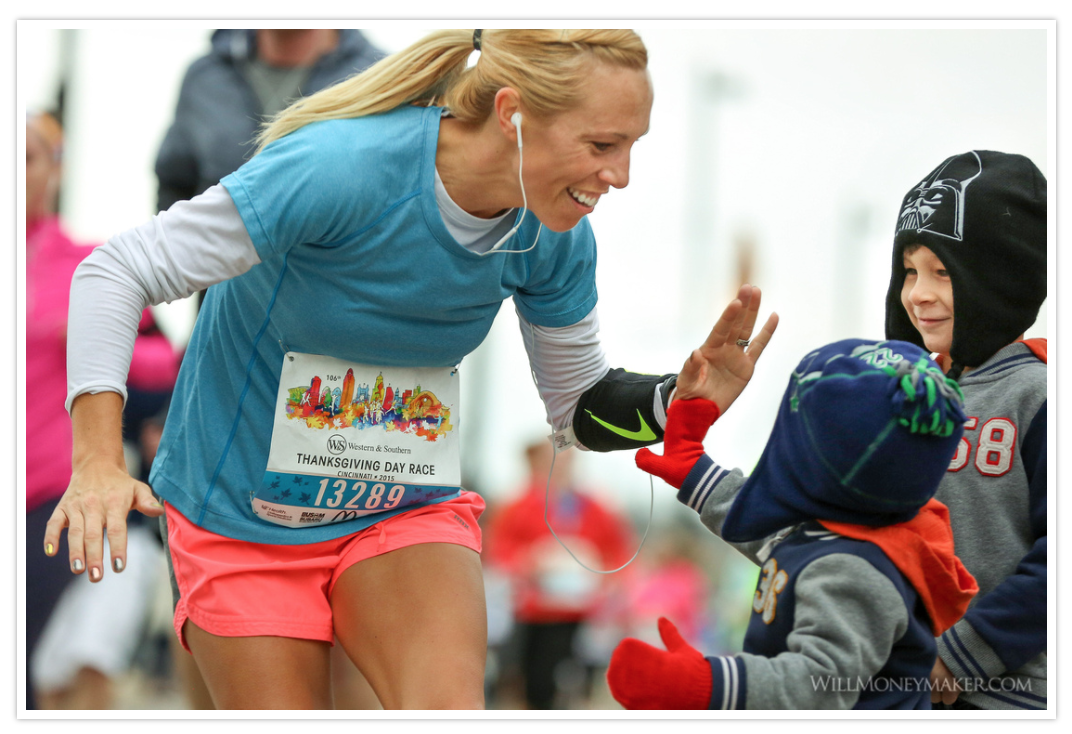
- Try to photograph athletes as they’re coming towards you, not from the back or sides. This makes for a more dynamic image, and you’ll be better able to capture facial expressions, too.
- Get as low to the ground as you can by kneeling. Low view angles make the action seem more intense, thus making your images much more powerful.
- As you move around to get the best vantages, always be aware of your surroundings. Never position yourself in such a way that you impede the athletes. Doing so can not only cause injuries, but an accidental misstep on your part gives all sports photographers a bad reputation.
- When it comes to accidents and injuries, adopt a “No Chimping!” rule. Chimping is checking the LCD display after each shot. Not only does this practice make you less aware of your surroundings (and any imminent danger) but it also means you might miss something great in the time it takes you to glance down at your camera.
- Don’t forget to get a few shots of the spectators! Their reactions to the things that they’re watching are just as important to telling the story as photos of the athletes themselves.
Sports photography is a challenge, but as long as you stay calm and remember what’s important, you’ll do just fine. Use these tips and you’ll be prepared for whatever the day brings!
Learn More
Read Nikon’s sports camera settings guide
Practice timing with candid photographs
Photograph historical reenactments
Photography Clips Newsletter
Keep looking. Keep creating.
Follow along with my photographs, journal entries, Photography Clips, and occasional life updates.
Free to join. Unsubscribe anytime.